
What changes after nine innings?
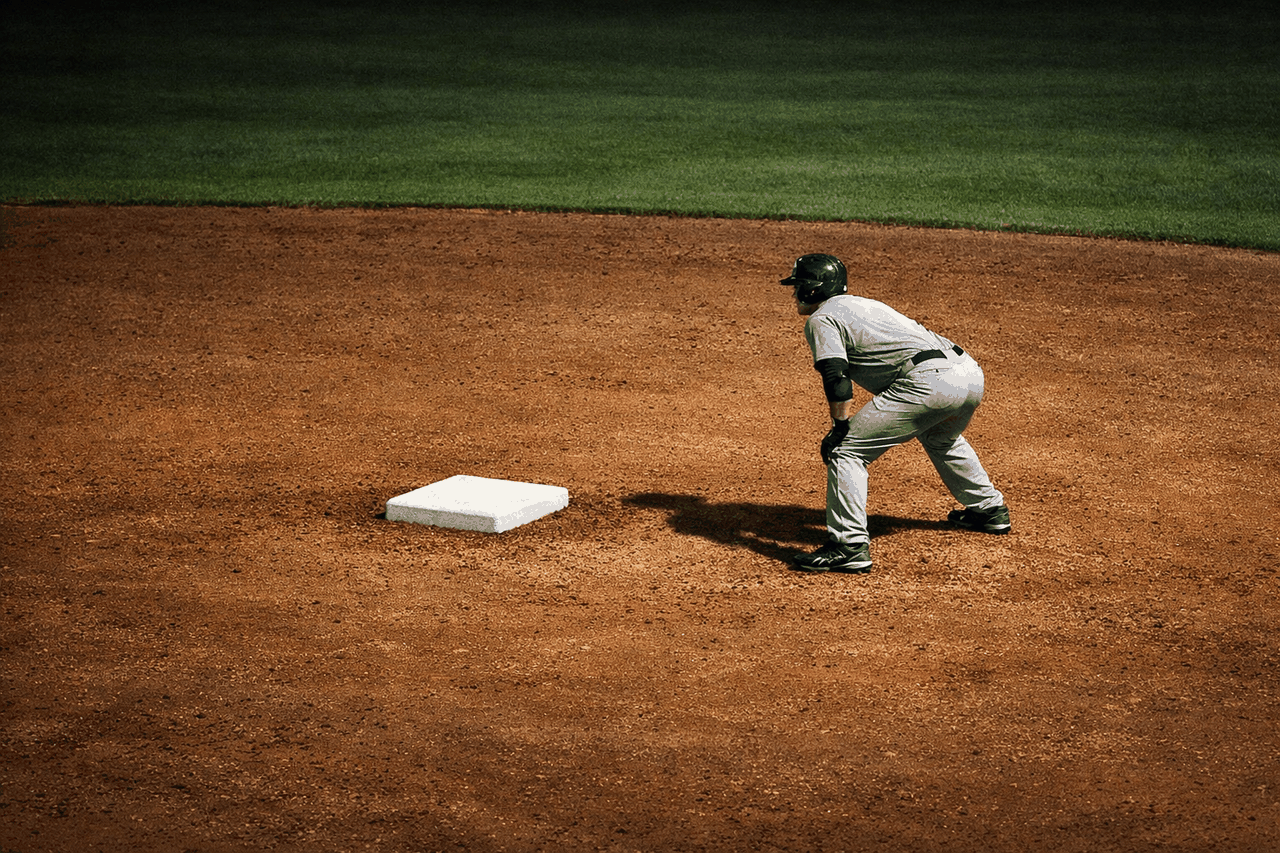
In 2026, an MLB regular-season game tied after nine innings starts each extra half-inning with a runner on second base and zero outs. In the postseason, each extra half-inning starts with empty bases and zero outs. In both settings, the batting order continues where it left off; it does not restart at the top.
The regular-season placement rule applies in the top and bottom of the 10th and every inning afterward. The runner is ordinarily the player whose batting-order position immediately precedes the hitter due up, or a substitute for that player. Those requirements appear in MLB’s 2026 Official Baseball Rules, Rule 7.01(b)(2). MLB’s official postseason format FAQ confirms that postseason extra innings begin without an automatic runner.
That difference gives the regular-season offense an immediate scoring opportunity. A single can bring home the placed runner. With the bases empty in the playoffs, the same single puts the batter on first without scoring anyone.
The same clean single, side by side
Start with a 2–2 tie entering the 10th. Batting-order slot 7 is due up, and slot 6 belongs to an eligible position player still in the game.
For this illustration, slot 7 hits an ordinary, clean single to the outfield. The ball is fielded without an error, the batter stops at first, and any runner starting on second has a clear path and enough time to score safely. A single does not always score a runner from second; these are the conditions chosen for this example.
| Regular season | Postseason |
|---|---|
| Opening situation: Tied 2–2, zero outs. Slot 6, or a pinch runner replacing that player, starts on second. Slot 7 bats. | Opening situation: Tied 2–2, zero outs. The bases are empty. Slot 7 bats. |
| The clean single: The runner from second scores safely under the stated conditions. The batting team leads 3–2, with the batter on first and zero outs, unless that run ends the game. | The clean single: There is no existing runner to bring home. The score stays 2–2, with the batter on first and zero outs. |
| If this is the top half: The visitors take a 3–2 lead. Their half-inning continues, and they must still defend the bottom half. | If this is the top half: The visitors remain tied 2–2. Their half-inning continues, and the home team still gets its turn. |
| If the home team begins its bottom half tied 2–2: The scoring runner supplies the decisive run. The home team wins 3–2 on a walk-off single. | If the home team begins its bottom half tied 2–2: The single scores nobody. The game remains tied, and the inning continues. |
The bottom-half row describes a separate 2–2 situation. If the visitors actually score in the top half to lead 3–2, the home team begins the bottom half trailing by one.
A lead in the top half still needs defending
Scoring first in extra innings does not give the visiting team an immediate win. After taking a 3–2 lead in the example, the visitors finish their turn at bat and then defend the bottom half. During the regular season, the home team receives its own placed runner on second, with zero outs and its next scheduled hitter at the plate.
If that home runner scores while the visitors lead 3–2, the score becomes 3–3. That is a tying run, so play continues. The home team needs another run to win.
The familiar walk-off distinction applies in both the regular season and postseason: when the home team scores the decisive run in the bottom of an extra inning, the game ends. On the single in this illustration, that happens as soon as the winning runner scores. The home team does not need to finish the inning with three outs. These extra-inning and game-ending provisions are covered by Rule 7.01(b) and (e).
Who can be placed on second?
With slot 7 due up, slot 6 supplies the regular-season runner in our example. A club may use a pinch runner instead, but the replaced player leaves the game and cannot reenter.
There is a specific pitcher exception. Under Rule 7.01(b)(2)(B), if the player who would otherwise start on second is the pitcher, the club may use the hitter immediately preceding that pitcher in the batting order, or a substitute for that hitter.
The placement also has a special scoring treatment. Under Rule 7.01(b)(2)(C), the runner is treated as having reached on an error for earned-run calculations. No fielding error is charged to a player or the team merely because the runner was placed on second. Both provisions appear in the 2026 Official Baseball Rules.
A 2026 example: Seattle’s walk-off against the Cubs
Seattle’s 6–5 win over the Cubs in 10 innings in August 2026 shows the regular-season rule in action. Randy Arozarena began the bottom of the 10th as the placed runner on second, advanced to third on a sacrifice bunt, and scored on Leo Rivas’s walk-off single, according to MLB’s game report.
In that game, the bunt moved the runner closer before the single brought him home. In our illustration, the runner scores directly from second because the hit allows it. In a postseason half-inning, neither opportunity exists at the outset: the offense begins with empty bases and must put its first runner aboard.